
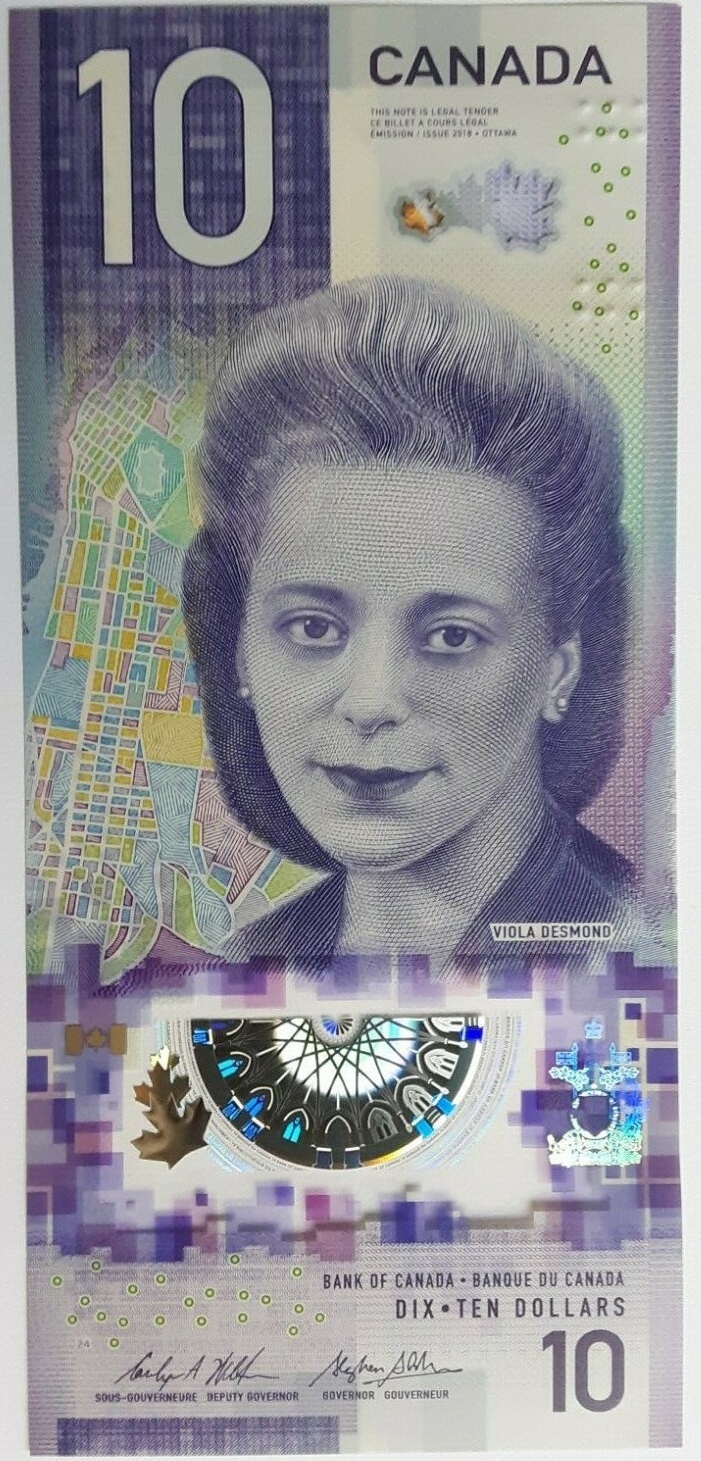
Viola Desmond’s Canadian civil rights legacy marks a defining moment in the nation’s social justice history. In 1946, the Black Nova Scotian businesswoman was wrongfully arrested for challenging racial segregation at a theater in New Glasgow, Nova Scotia. Her courageous stand against systemic discrimination sparked Canada’s modern civil rights movement, ultimately leading to her posthumous royal prerogative of mercy in 2010 and her historic placement on the Canadian vertical ten-dollar bill.
Viola Desmond: The Full Story of the Black Nova Scotian Woman Who Sparked Canada’s Civil Rights Movement
Who Was Viola Desmond?
Viola Desmond was a Black Nova Scotian businesswoman and beautician who, in 1946, refused to leave the whites-only main floor section of a segregated movie theatre, becoming one of the most important figures in Canada’s civil rights history.
Early Life and the Making of a Businesswoman
Viola Irene Desmond was born on July 6, 1914, in Halifax, Nova Scotia. As a young woman training to be a teacher, she found her real ambition after reading about the American entrepreneur Madam C.J. Walker, who had built a business empire around hairdressing schools and salons for Black women in the United States. Desmond wanted to do the same for Black women in Halifax.
There was an immediate obstacle: Nova Scotia’s beauty schools at the time did not accept Black students. Rather than give up, Desmond trained as a beautician in Montreal and later continued her studies in the United States, where she also learned cosmetology and developed her own line of beauty products for darker skin tones, sold under the trade name Sepia. She returned to Halifax and opened Vi’s Studio of Beauty Culture, and later founded the Desmond School of Beauty Culture — a training academy that gave Black women across Nova Scotia a path into the beauty industry that had previously excluded them entirely.
By 1946, Desmond was a respected businesswoman with her own car, her own product line, and a growing training school. She was, by every account, exactly the kind of self-made entrepreneur Canadian mythology likes to celebrate — which makes what happened to her that November even harder to reconcile with the country’s image of itself.
The Night at the Roseland Theatre
What Happened to Viola Desmond at the Roseland Theatre?
On November 8, 1946, Viola Desmond sat in the main-floor section of the Roseland Theatre in New Glasgow, Nova Scotia, which was informally reserved for white patrons, and was forcibly removed, arrested, and jailed overnight when she refused to move to the balcony.
The full story begins with car trouble. Desmond was travelling from Halifax to Sydney, Cape Breton, to deliver beauty products to retailers, when her car broke down in New Glasgow. Told the repair would take until the next morning, she checked into a hotel and decided to pass the evening watching a film — The Dark Mirror — at the local Roseland Theatre.
Nova Scotia had no formal, written segregation laws. But the Roseland, like many businesses of the era, enforced an unofficial rule: Black patrons sat in the balcony, white patrons sat on the main floor. Desmond, unaware of this unwritten policy, asked for a main-floor ticket. The cashier sold her a balcony ticket instead. Being nearsighted and wanting a closer view of the screen, Desmond walked to the main floor and took a seat.
An usher approached and told her she was in the wrong section. Thinking it was a simple mix-up, Desmond went back to the cashier and asked to exchange her ticket, even offering to pay the price difference. The cashier refused, telling her plainly that she was not permitted to sell downstairs tickets to “you people.” Only then did Desmond understand what was actually happening. She returned to her seat on the main floor and stayed there.
The theatre manager confronted her directly. When she still refused to move, he called the police. Desmond was physically dragged out of the theatre — the ordeal left her with a badly bruised hip and knee — and taken to jail, where she spent the night alone, without being told she had the right to a lawyer.
The Trial: A Tax Charge Standing in for Racism
The next morning, Desmond appeared in court. Notably, she was never charged with violating any segregation rule — because no such rule legally existed. Instead, prosecutors used Nova Scotia’s provincial amusement tax law as a workaround. The tax on a main-floor ticket was one cent higher than the tax on a balcony ticket. By sitting on the main floor with only a balcony ticket, Desmond was accused of defrauding the government of that single cent, even though she had explicitly offered to pay the difference and been refused.
Desmond was fined $20 plus $6 in court costs — a significant sum at the time — or 30 days in jail. She was not informed of her right to legal counsel, her right to cross-examine witnesses, or her right to request a delay in the trial. The only witnesses called were the theatre manager, the cashier, and the usher — all testifying against her.
Rather than quietly pay and move on, Desmond decided to fight back. With support from her church, the Nova Scotia Association for the Advancement of Coloured People (NSAACP), and a lawyer named Frederick Bissett, she took her case to the Supreme Court of Nova Scotia. Carrie Best, founder of The Clarion — Nova Scotia’s first Black-owned newspaper, and someone who had personally confronted the Roseland’s segregation policy years earlier — put Desmond’s story on the front page and kept it there.
The appeal ultimately failed. The courts upheld her conviction, and the question of race was never formally addressed in any ruling — the entire case was litigated and lost on the technicality of the tax law, even though everyone involved understood exactly what the case was really about.
Life After the Trial
The personal cost of the case was steep. Desmond’s marriage did not survive the strain, and she eventually closed her beauty business in Halifax. She moved to Montreal to study business, then relocated to New York City, where she built a new career as a talent agent. She died in New York on February 7, 1965, at the age of 50, and is buried at Camp Hill Cemetery in Halifax.
For decades afterward, Viola Desmond’s story faded from public memory. Segregation in Nova Scotia theatres was not formally ended until 1954 — eight years after her arrest — and even then, her case had not resulted in any official acknowledgment of wrongdoing. Meanwhile, the story of Rosa Parks, whose 1955 refusal to give up her bus seat in Montgomery, Alabama happened nearly nine years after Desmond’s stand, became internationally famous. Desmond’s name, by contrast, was known mainly within Nova Scotia’s Black community.
Rediscovery and the 2010 Pardon
Was Viola Desmond Ever Pardoned?
Yes, in April 2010 the Government of Nova Scotia granted Viola Desmond a posthumous free pardon, the first ever issued in Canada, along with an official apology for her wrongful conviction.
The push to bring Desmond’s story back into public view was led largely by her younger sister, Wanda Robson, who spent years advocating for formal recognition and later co-authored two books about Desmond’s life with historian Graham Reynolds. Their efforts, combined with growing public awareness, led Nova Scotia’s government to act.
On April 15, 2010, Nova Scotia’s Lieutenant Governor Mayann Francis — herself the first African Nova Scotian to hold that office — invoked the Royal Prerogative of Mercy to grant Desmond a free pardon. A free pardon is a distinct and more powerful legal instrument than a simple pardon: it formally treats the person as though they never committed the offence in the first place, rather than merely forgiving a conviction that stands. It remains the first posthumous free pardon ever granted in Canadian history.
The province also issued a formal apology to Desmond’s family, acknowledging that her conviction had been wrongful from the start. In 2021, the Government of Nova Scotia went a step further, repaying an inflation-adjusted amount of Desmond’s original fine directly to Wanda Robson.
Legacy: The Ten Dollar Bill and National Recognition
Why Is Viola Desmond on the Canadian Ten Dollar Bill?
Viola Desmond was chosen for the $10 bill, released in 2018, to honor her as the first Black person and first non-royal woman to be permanently featured on regularly circulating Canadian currency.
The Bank of Canada announced the decision in December 2016, and the redesigned vertical $10 note entered circulation on November 19, 2018. It remains one of the most significant public honors ever given to a Black Canadian historical figure. Recognition has continued to build in the years since:
| Year | Recognition |
|---|---|
| 2010 | Posthumous free pardon and official apology from the Nova Scotia government |
| 2012 | Commemorated on a Canada Post stamp during Black History Month |
| 2016 | Featured in a Historica Canada Heritage Minute; a Halifax ferry named in her honor |
| 2017 | Inducted into Canada’s Walk of Fame; designated a National Historic Person |
| 2018 | Became the face of the Canadian $10 bill |
| Ongoing | Nova Scotia Heritage Day held annually in her honor since 2015; the Viola Desmond Chair in Social Justice at Cape Breton University |
The city of Toronto renamed a park in her honor, New Glasgow renamed the street outside the former theatre “Viola’s Way,” and in 2023 the Toronto International Film Festival’s largest screening room at TIFF Bell Lightbox was renamed the Viola Desmond Theatre.
Viola Desmond and Rosa Parks: An Important Distinction
How Is Viola Desmond Similar to Rosa Parks?
Both women refused to give up their seats in racially segregated spaces, but Viola Desmond’s act of resistance in Nova Scotia took place nearly nine years before Rosa Parks refused to move on a Montgomery, Alabama bus in 1955.
The comparison is useful, but it’s worth being precise about the differences too. Parks’ action was a planned act of civil disobedience organized in coordination with the NAACP and the broader Montgomery bus boycott. Desmond’s stand at the Roseland was unplanned — she had no intention of making a political statement that evening, and only refused to move once she understood she was being denied a seat because of her race. What both cases share is what happened next: an individual act of refusal that, through a court case and public attention, exposed a system of informal, unlegislated segregation that many Canadians at the time preferred not to acknowledge existed at all.
Canada’s segregation was rarely written into law the way the American South’s Jim Crow statutes were. It operated instead through the unofficial policies of individual businesses — restaurants, theatres, and hotels making their own rules, enforced without needing legislation at all. That made it, in some ways, harder to fight in court, because there was no explicit law to challenge. The Desmond case had to be litigated as a tax dispute precisely because no segregation statute existed to contest directly.
Why This Case Still Matters
Viola Desmond’s case is often cited as the moment that helped spark Nova Scotia’s modern civil rights movement, and by extension, laid groundwork for broader Black Canadian activism throughout the 20th century. Her unsuccessful appeal to the Nova Scotia Supreme Court confirmed, in a very direct way, that the legal system offered African Nova Scotians no real protection against this kind of treatment — and that realization is credited with galvanizing the community’s push for formal civil rights legislation in the years that followed. Nova Scotia’s theatres desegregated in 1954, and the province’s broader human rights framework developed substantially in the decades after.
The nearly 65-year gap between Desmond’s conviction and her pardon says something important on its own: formal acknowledgment of historical injustice in Canada has often lagged decades behind the injustice itself, and has frequently depended on the sustained effort of family members and community advocates — in this case, her sister Wanda Robson — rather than on institutions acting on their own initiative.
Frequently Asked Questions
Who was Viola Desmond?
Viola Desmond was a Black Nova Scotian businesswoman and beautician who, in 1946, refused to leave the whites-only main floor section of a segregated movie theatre, becoming one of the most important figures in Canada’s civil rights history.
What happened to Viola Desmond at the Roseland Theatre?
On November 8, 1946, Viola Desmond sat in the main-floor section of the Roseland Theatre in New Glasgow, Nova Scotia, which was informally reserved for white patrons, and was forcibly removed, arrested, and jailed overnight when she refused to move to the balcony.
Was Viola Desmond ever pardoned?
Yes, in April 2010 the Government of Nova Scotia granted Viola Desmond a posthumous free pardon, the first ever issued in Canada, along with an official apology for her wrongful conviction.
Why is Viola Desmond on the Canadian ten dollar bill?
Viola Desmond was chosen for the $10 bill, released in 2018, to honor her as the first Black person and first non-royal woman to be permanently featured on regularly circulating Canadian currency.
How is Viola Desmond similar to Rosa Parks?
Both women refused to give up their seats in racially segregated spaces, but Viola Desmond’s act of resistance in Nova Scotia took place nearly nine years before Rosa Parks refused to move on a Montgomery, Alabama bus in 1955.