
🎤 Civil Rights Milestones
Martin Luther King Jr.’s “I Have a Dream” speech, delivered August 28, 1963, at the March on Washington, is the most-searched speech in American history — and its most famous section was never written down at all. King spoke for roughly seventeen minutes to a crowd of over 250,000 people gathered at the Lincoln Memorial, and his prepared text made no mention of a “dream.” In a 1999 poll of scholars of public address, it was ranked the top American speech of the 20th century.
Official Source:Wikipedia — I Have a Dream
🎙️✨📜
🎙️ The Half That Wasn’t in His Notes
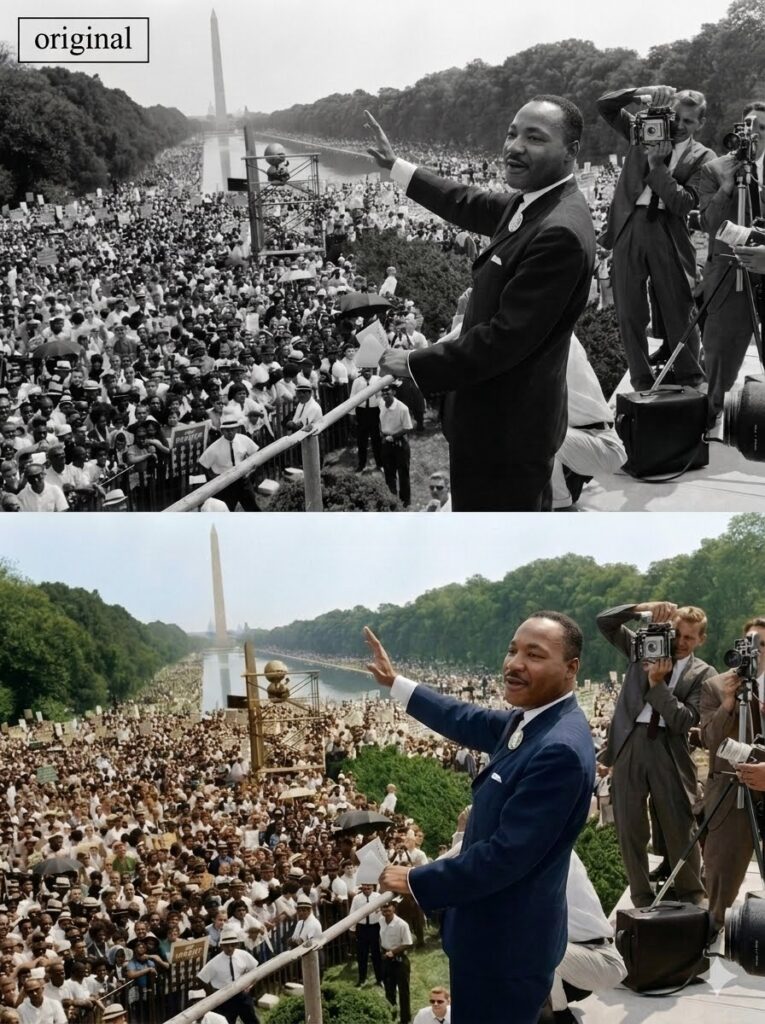
King spoke for roughly seventeen minutes, about 1,600 words, to some 250,000 people gathered on the National Mall. He was the sixteenth of eighteen speakers that day, addressing an exhausted crowd on a hot afternoon. His prepared remarks that day made no mention of a “dream” at all — that section simply wasn’t in the text sitting on the podium in front of him.
🎵🙌🎶
🎵 The Woman Who Changed the Speech Live
Gospel singer Mahalia Jackson, already internationally famous as the “Queen of Gospel” and a longtime friend of King’s since the Montgomery bus boycott, had just performed before he stepped up to speak. Partway through his prepared remarks, standing behind him, she called out: “Tell them about the dream, Martin!” Clarence Jones, an advisor standing about 50 feet behind King, later described watching him physically push his notes aside and grip the lectern. He turned to a stranger next to him and said the crowd was “about ready to go to church.”
📝 A Refrain He’d Already Rehearsed on Smaller Stages
The improvisation wasn’t invented on the spot from nothing — King had used dream imagery before, in a Birmingham church meeting that April and again at a Detroit rally in June 1963, in front of 125,000 people at Cobo Hall. What made the Lincoln Memorial version different was scale, timing, and Jackson’s nudge at exactly the right moment. King later said he simply grasped at “the first run of oratory” available to him, unsure if her words had even registered consciously.
🎶 Built Like a Piece of Music
King structured the improvised section the way a preacher builds a sermon, using anaphora — repeating an opening phrase to create rhythm a congregation can lean into. “I have a dream,” “Now is the time,” “Let freedom ring,” and “We can never be satisfied” each function as a returning drumbeat, turning a list of grievances and hopes into something closer to a rising wave than a policy speech.
⛰️ A Pointed Detail Most People Miss
When King called for freedom to “ring from Stone Mountain of Georgia,” it wasn’t a random geographic reference. Stone Mountain had been a Ku Klux Klan gathering site in the early 20th century, and its owners — Klan members themselves — had carved a memorial to Confederate leaders Jefferson Davis, Robert E. Lee, and Stonewall Jackson into its face. King was naming a monument to white supremacy and directly claiming it for a different future.
🏆 How It’s Remembered Today
In a 1999 poll of scholars of public address, the speech was ranked the top American speech of the entire 20th century. Historian Jon Meacham has written that with a single improvised phrase, King joined Jefferson and Lincoln in the small group of figures who reshaped how America understands itself. King was 34 years old that day. He would win the Nobel Peace Prize the following year.
🎯 Final Thought
The most quoted lines of the “I Have a Dream” speech exist because a gospel singer, standing a few feet away, trusted her instinct more than King trusted his own printed notes. That single interruption is a reminder that some of the most studied moments in American oratory weren’t planned at all — they were built, live, on decades of smaller rehearsals nobody was watching.
🧠 The Man Who Built the Stage — and Was Kept Off the Cameras
King’s speech only happened because of a logistical operation most Americans have never heard of, run by a man most history classes skip entirely: Bayard Rustin. Given less than eight weeks to organize what would become the largest demonstration the country had ever seen, Rustin worked out of a Harlem brownstone with a staff of over 200 volunteers, coordinating buses, trains, first aid stations, and even the exact number of portable toilets needed for a quarter of a million people. He personally produced an eleven-page planning leaflet distributed nationwide, covering everything from political demands to advice on packing a lunch.
Rustin was also a gay Black man in 1963, openly so, at a time when that alone could end a career. Segregationist Senator Strom Thurmond attacked him by name on the Senate floor three weeks before the march, reading from Rustin’s arrest record to discredit the entire movement. Because of that pressure, organizers made A. Philip Randolph the public face and director of the march, while Rustin — the actual architect of nearly every detail — worked as deputy director, deliberately kept out of the spotlight he had built. He received the Presidential Medal of Freedom posthumously in 2013, exactly fifty years after the march he made possible.
🏆 How It’s Remembered Today
In a 1999 poll of scholars of public address, the speech was ranked the top American speech of the entire 20th century. Historian Jon Meacham has written that with a single improvised phrase, King joined Jefferson and Lincoln in the small group of figures who reshaped how the country understands itself. King was 34 years old that day; he would win the Nobel Peace Prize the following year, and be assassinated less than five years later.
🎯 Final Thought
The most quoted lines of the “I Have a Dream” speech exist because a gospel singer trusted her instinct more than King trusted his own printed notes — and because a gay Black organizer, denied the credit and the spotlight he’d earned, made sure there was a stage, a sound system, and a quarter of a million people there to hear it in the first place. The moment everyone remembers was built on two contributions history has spent decades trying to remember to mention.
Sources: Wikipedia · National Park Service · NPR · Congress.gov
📝 A Refrain He’d Already Rehearsed on Smaller Stages
The improvisation wasn’t invented from nothing. King had used dream imagery before — at a 16th Street Baptist Church meeting in Birmingham that April, describing children walking to school together regardless of race, and again at a Detroit rally that June in front of 125,000 people at Cobo Hall, where he spoke of Black families being able to buy homes wherever they could afford them. He didn’t plan to reuse it in Washington; the notes on the podium simply didn’t include it. King later said he grasped at “the first run of oratory” available to him in that moment, unsure whether Jackson’s words had even registered consciously before he began.
🎶 Built Like a Piece of Music, Not a Policy Speech
King structured the improvised section the way a preacher builds toward a congregation’s response, using anaphora — repeating an opening phrase until it becomes a rhythm the crowd can lean into. “I have a dream,” “Now is the time,” “Let freedom ring,” and “We can never be satisfied” each function as a returning drumbeat. The first half of the speech is a blunt indictment — describing segregation, broken promises, and what he called the “tranquilizing drug of gradualism” — and only afterward does he open into the vision. Scholars have noted the hope lands harder specifically because it follows an unflinching account of the wound; offered first, it would have sounded like denial rather than earned optimism.
⛰️ A Pointed Detail Almost Everyone Misses
When King called for freedom to ring out “from Stone Mountain of Georgia,” it wasn’t a random geographic flourish. Stone Mountain had served as a Ku Klux Klan gathering site in the early 20th century, and in the 1920s its owners — Klan members themselves — carved a massive memorial into its face honoring Confederate president Jefferson Davis and generals Robert E. Lee and Stonewall Jackson. King was naming an actual monument to white supremacy on U.S. soil and directly claiming that ground for a different future, in front of a quarter-million people.
⚖️ Brown v. Board: The Legal Victory That Came First
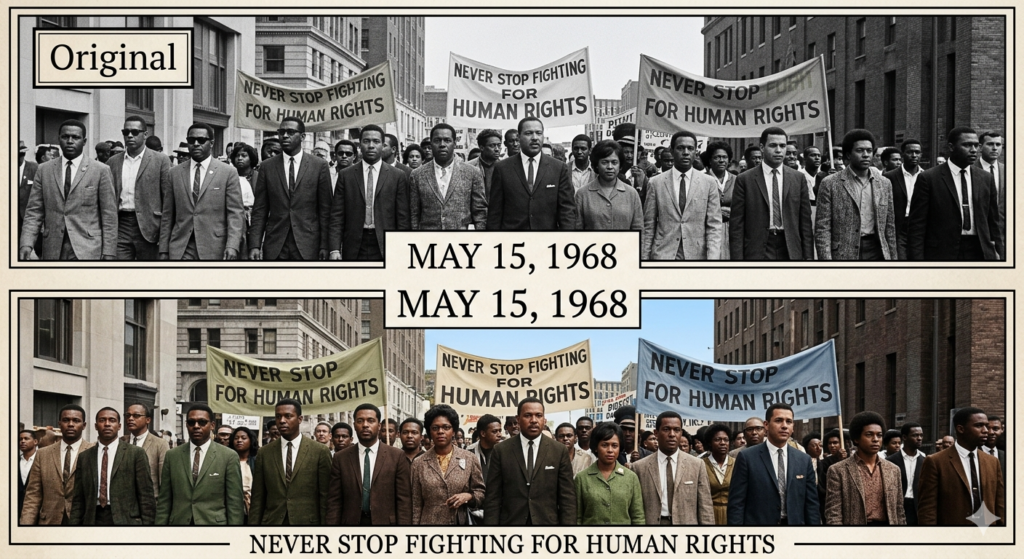
The 1963 March on Washington and Martin Luther King Jr.’s speech didn’t emerge in a vacuum. Nine years earlier, in 1954, the U.S. Supreme Court ruled in Brown v. Board of Education that racial segregation in public schools was unconstitutional, overturning the “separate but equal” doctrine that had stood since 1896. It was the first major legal victory of the modern civil rights movement — but Southern states resisted enforcement almost immediately.
🚌 381 Days: The Montgomery Bus Boycott
On December 1, 1955, Rosa Parks refused to give up her bus seat in Montgomery, Alabama, and was arrested. The Black community responded with a boycott of the city’s buses that lasted 381 days — walking miles to work, organizing carpools, enduring a hostile winter — until the Supreme Court ordered Montgomery’s buses desegregated. A 26-year-old pastor named Martin Luther King Jr. led that boycott. It was his first national platform, seven years before he stood at the Lincoln Memorial.
🚸 The Little Rock Nine and Federal Troops
In 1957, nine Black students attempting to enroll at Little Rock Central High School in Arkansas were blocked by the state’s own National Guard, acting on the governor’s orders. President Eisenhower federalized the Guard and deployed the U.S. Army’s 101st Airborne Division to escort the students to class — the first time federal troops had protected Black civil rights since Reconstruction.
🚏 The Freedom Riders
In 1961, Black and white activists calling themselves Freedom Riders boarded interstate buses together, deliberately testing a Supreme Court ruling banning segregation on interstate travel — a ruling most Southern states simply ignored. Riders were beaten, and one bus was firebombed outside Anniston, Alabama. The images forced federal intervention and pushed civil rights further into the national conversation, laying groundwork for the mass mobilization that followed two years later in Washington.
📜 “Five Score Years Ago”: Echoing Lincoln
King opened his speech not with “I have a dream” but with “Five score years ago” — a deliberate echo of Abraham Lincoln’s Gettysburg Address, which begins “Four score and seven years ago.” Standing at the Lincoln Memorial on the 100th anniversary of the Emancipation Proclamation, King tied his message directly to Lincoln’s unfinished promise, arguing that a century later, Black Americans were “still not free.”
💰 The “Bad Check” Metaphor Few People Quote
Before the dream sequence, King used a financial image: America had given Black citizens a “promissory note” — the guarantees written into the Declaration of Independence — and had defaulted on it, handing back “a check marked insufficient funds.” He told the crowd he refused to believe “the bank of justice is bankrupt.” It’s one of the most powerful metaphors in the “I Have a Dream” speech, yet it rarely appears in popular retellings, which tend to skip straight to the dream sequence.
📖 A Speech Built on Scripture
King was a Baptist preacher before he was a civil rights leader, and the speech’s language draws directly from the Bible. “Let justice roll down like waters, and righteousness like a mighty stream” is a near-direct quote from the Book of Amos. “Every valley shall be exalted” echoes the Book of Isaiah. For the many Black churchgoers in the crowd that day, these weren’t abstract references — they were familiar sermon cadences, which is part of why the speech landed as a spiritual experience as much as a political one.
🎼 Anaphora: The Rhetorical Engine of the Speech
King structured the improvised section the way a preacher builds toward a congregation’s response, using anaphora — repeating an opening phrase until it becomes a rhythm the crowd can lean into. “I have a dream,” “Now is the time,” “Let freedom ring,” and “We can never be satisfied” each function as a returning drumbeat. Scholars of public address point to this structure as one of the key reasons the speech remains so quotable and teachable six decades later.
BY AI
❓ People Also Ask
🏛️ From Speech to Statute: The Civil Rights Act of 1964
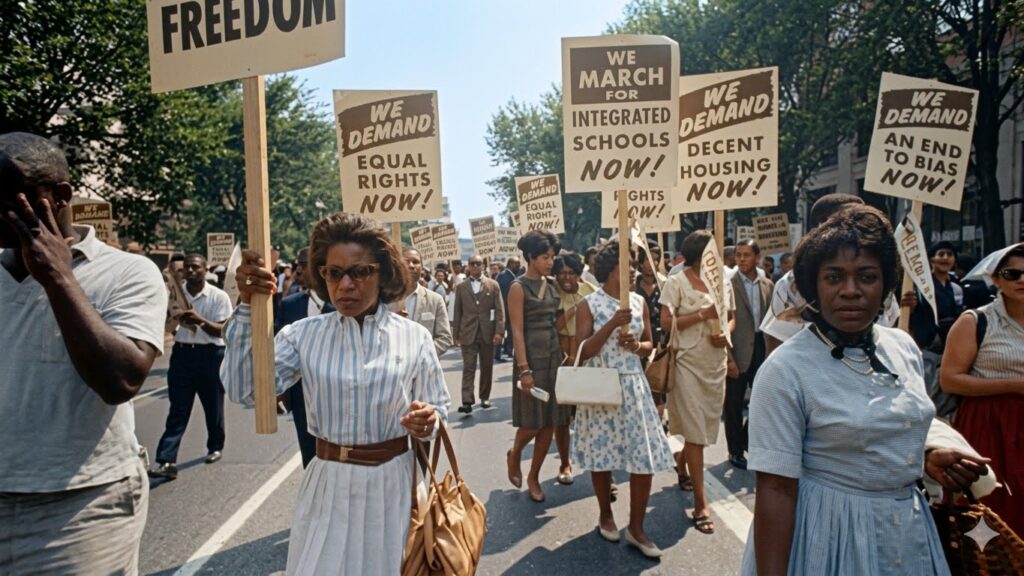
The March on Washington was direct political pressure aimed at a specific piece of legislation stalled in Congress. President Kennedy had initially discouraged organizers from marching at all, fearing it would alienate the lawmakers whose votes they needed. They marched anyway. Less than a year later, the Civil Rights Act of 1964 was signed into law, banning discrimination based on race, color, religion, sex, or national origin in public places and employment.
🗳️ The Voting Rights Act of 1965
A second piece of landmark legislation followed in 1965: the Voting Rights Act, which outlawed literacy tests and other discriminatory practices that Southern states had used for decades to block Black citizens from voting. It came after another wave of protest — including the Selma to Montgomery marches, where peaceful demonstrators were beaten by state troopers on a day now remembered as “Bloody Sunday.”
🕊️ King’s Assassination and Unfinished Work
Martin Luther King Jr. was assassinated in Memphis, Tennessee, on April 4, 1968, at the age of 39, while supporting a sanitation workers’ strike — a reminder that his final campaigns were as much about economic justice as legal equality. At the time of his death, he was organizing the Poor People’s Campaign, aimed at addressing poverty across racial lines, a direct continuation of the “Jobs and Freedom” demands first raised at the March on Washington five years earlier.
🌍 Why the Speech Still Resonates Today
More than 60 years later, “I Have a Dream” remains one of the most cited texts in American civic education, referenced in political speeches across the ideological spectrum. Its enduring power lies in what historians call its dual appeal: it names a specific historical wound with precision, while framing the solution in language broad enough that each new generation can apply it to its own struggles for equality — a quality few political speeches ever achieve.
📖 Related Reading
Think you know Canada’s civil rights story? Think again.
From colonial-era enslavement to the courtroom battles that rewrote the Constitution — discover the milestones Canadian history books left out.
→ Milestones For Black Canadian Civil Rights And Justice: Full Guide